Common Problems with Hybrid Solar Inverters and How to Fix Them
Learn the top issues affecting hybrid solar inverters in 2026, their causes, warning signs, and expert solutions to restore optimal performance.
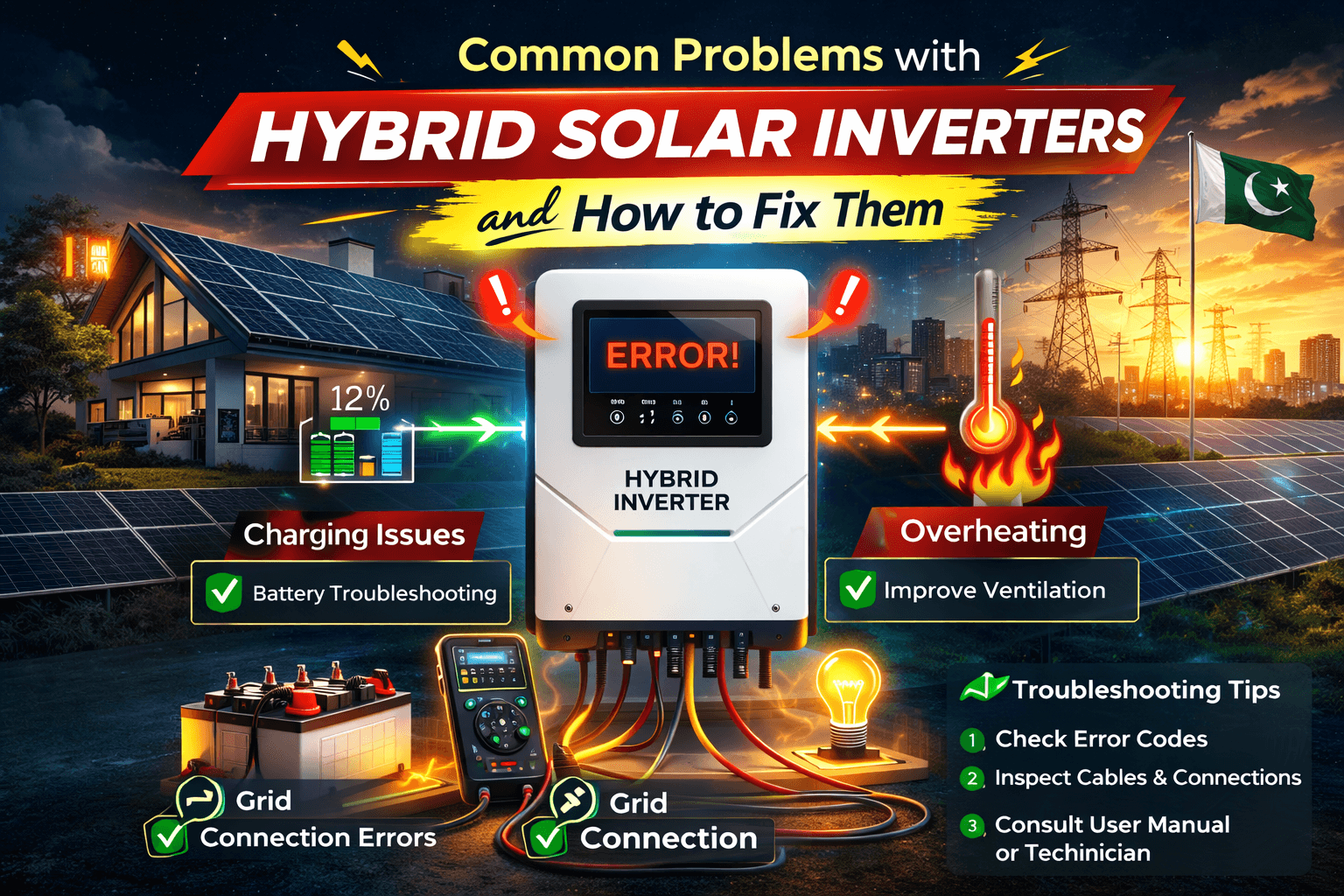
Hybrid solar systems are becoming increasingly popular in Pakistan, especially with rising electricity prices and frequent load shedding. At the heart of every hybrid solar setup is the hybrid solar inverter. This device manages power from solar panels, batteries, and the grid simultaneously. It ensures smooth switching between sources and keeps your home or business powered without interruption. Because it plays such a critical role, even a small issue in the inverter can affect the entire system. Understanding common problems and how to fix them can save both time and money.
Common Problems with Hybrid Solar Inverters and How to Fix Them
Hybrid solar inverters are reliable, but like any electronic device, they can face technical issues.
Below are some of the most common problems people face in Pakistan, along with practical ways to address them.
1. Inverter Not Turning On
One of the most frustrating issues is when the inverter simply does not power up.
Possible Causes:
No battery connection
Blown fuse
Loose wiring
Completely drained batteries
How to Fix It:
First, check if the battery is properly connected and charged. Inspect the DC breaker and fuses. If everything looks fine, but the inverter still doesn’t turn on, it’s better to contact a technician rather than opening the unit yourself.
2. Battery Not Charging Properly
Many users complain that their batteries do not fully charge, especially during winter.
Possible Causes:
Low solar panel output
Incorrect charging settings
Faulty battery
Dusty or shaded solar panels
How to Fix It:
Clean the solar panels regularly to ensure maximum sunlight absorption. Check the charging parameters in the inverter settings. Make sure the battery type (AGM, Gel, Lithium) is correctly selected. If the issue continues, test the battery health.
3. Frequent Switching Between Grid and Solar
Some hybrid inverters keep switching between solar and grid power, even when sunlight is available.
Possible Causes:
Voltage fluctuations
Incorrect priority settings
Grid instability (common in Pakistan)
How to Fix It:
Adjust the inverter’s priority mode to “Solar First” if required. Check input voltage levels. In areas with unstable grid supply, installing a voltage stabilizer may help protect the system.
Also read >> How to Troubleshoot Voltage Fluctuations in Hybrid Inverters
4. Overheating Issues
Due to high temperatures in cities like Lahore, Karachi, and Multan, overheating is common.
Possible Causes:
Poor ventilation
Dust accumulation
Overloading
How to Fix It:
Install the inverter in a well-ventilated area away from direct sunlight. Clean air vents regularly. Make sure the connected load does not exceed the inverter’s capacity. Overloading can permanently damage internal components.
5. Error Codes on Display
Hybrid solar inverters often show error codes that confuse users.
Common Errors:
Overload warning
Low battery warning
Short circuit fault
Over-voltage error
How to Fix It:
Refer to the user manual for specific error meanings. Reduce the load if overload appears. Check the wiring if a short circuit error is displayed. If you are unsure about the code, consult a qualified technician instead of experimenting.
6. Reduced Solar Output
Sometimes users notice that solar generation is lower than expected.
Possible Causes:
Dust and pollution on panels
Incorrect tilt angle
Wiring losses
MPPT issues
How to Fix It:
In Pakistan, dust buildup is a major issue. Clean panels every 2–4 weeks. Ensure panels are installed at the correct angle for maximum sunlight exposure. If the MPPT controller inside the inverter is faulty, professional repair is required.
7. Inverter Making Unusual Noise
A humming or buzzing sound can be worrying.
Possible Causes:
Cooling fan problem
Loose internal parts
Transformer vibration
How to Fix It:
If the sound is louder than normal, get it checked. Sometimes replacing the cooling fan solves the issue. Ignoring unusual noises can lead to bigger damage.
8. Communication or WiFi Monitoring Failure
Many modern hybrid inverters come with WiFi monitoring systems.
Possible Causes:
Weak internet connection
Outdated firmware
Monitoring module fault
How to Fix It:
Restart the router and inverter. Check firmware updates. If monitoring still fails, the communication module may need replacement.
Preventive Maintenance Tips
Prevention is always better than repair. To keep your hybrid solar inverter running smoothly:
Clean solar panels regularly
Avoid overloading the system
Ensure proper ventilation
Schedule annual professional inspection
Use high-quality batteries
Regular maintenance can increase the lifespan of your inverter by several years.
Why Professional Support Matters in Pakistan
In Pakistan’s climate and power conditions, hybrid solar systems work under stress. Voltage fluctuations, extreme heat, and dust storms can all impact performance. Trying to repair complex inverter issues without technical knowledge can cause more harm than good.
Choosing professional support ensures safe troubleshooting, correct configuration, and long-term reliability.
Final Words
Hybrid solar inverters are the backbone of any solar energy system. When they function properly, they provide energy independence, lower electricity bills, and protection against load shedding. However, like any advanced equipment, they require proper installation and regular maintenance.
If you are facing issues or planning to install a new system, PowerZone is here to help you buy, install, and maintain your Hybrid Solar Inverter. From troubleshooting and repairs to complete system setup, PowerZone provides reliable and professional services across Pakistan to keep your solar system running efficiently and safely.