Everything You Need to Know About Hybrid Inverters in 2026
Everything you need to know about hybrid inverters in 2026 — how they work, benefits, costs, battery integration, and why they’re essential for solar systems.
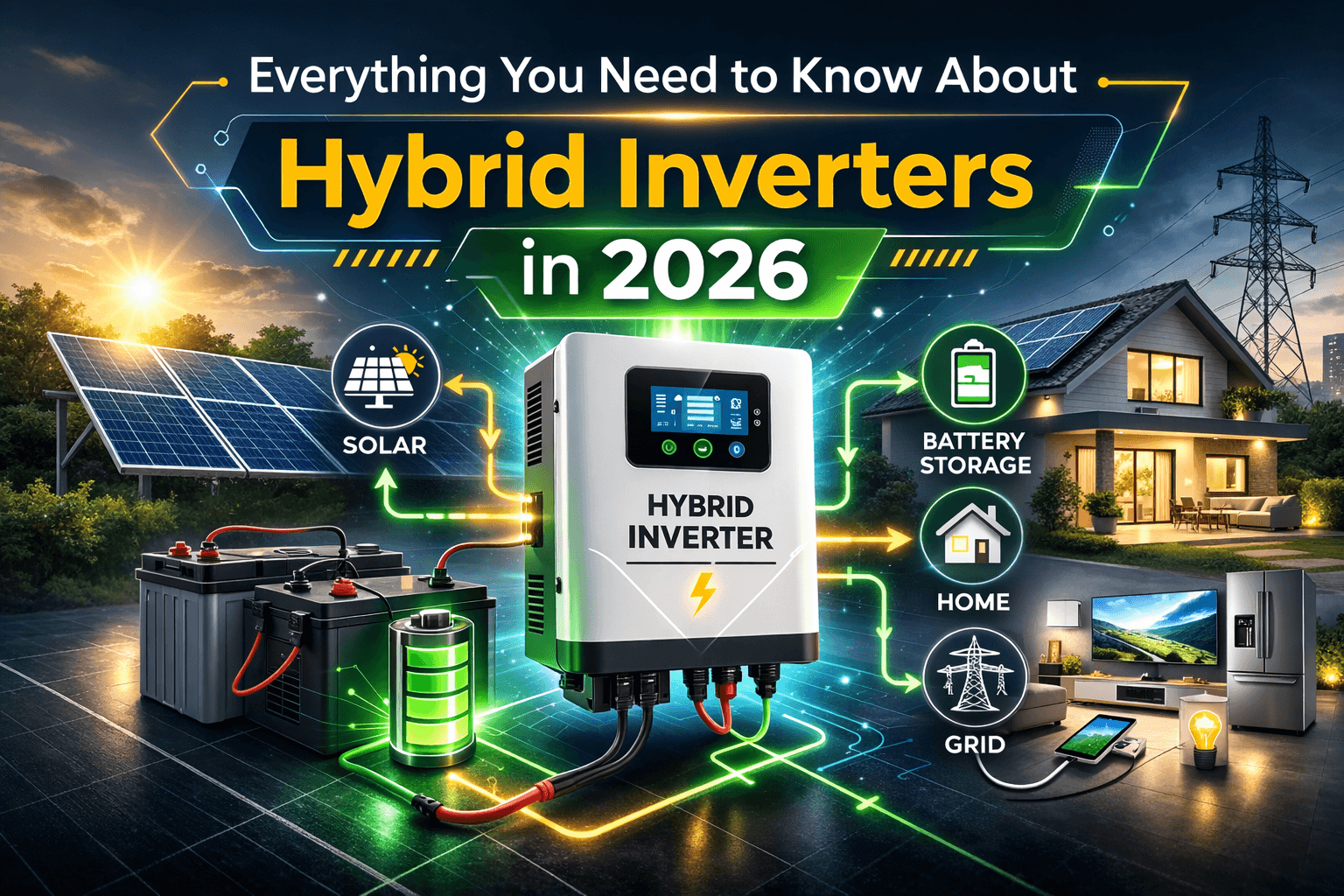
Hybrid inverters have become one of the most important components in Pakistan’s growing solar market. With rising electricity prices, long load-shedding hours, and increasing awareness about renewable energy, more households and businesses are shifting toward solar solutions. But solar panels alone are not enough. The real intelligence of any modern solar system lies in the inverter, and in 2026, hybrid inverters are leading the way.
Everything You Need to Know About Hybrid Inverters in 2026
If you are planning to install a solar system in Pakistan, understanding hybrid inverters can help you make a smarter and future-proof decision.
What Is a Hybrid Inverter?
A hybrid inverter is an advanced solar inverter that can manage power from multiple sources at the same time. It connects solar panels, batteries, the national grid (WAPDA), and sometimes even generators — all in one system.
Unlike traditional inverters that only convert solar DC power into usable AC power, hybrid inverters intelligently decide:
When to use solar energy
When to charge batteries
When to take electricity from the grid
When to send excess power back (if net metering is available)
In simple words, a hybrid inverter acts as the brain of your solar setup.
Why Hybrid Inverters Are Important in Pakistan
In Pakistan, electricity instability is still a major issue. Voltage fluctuations and unexpected power cuts can damage appliances and disturb daily life.
Hybrid inverters solve several local problems:
They provide backup during load shedding.
They reduce dependency on WAPDA.
They lower monthly electricity bills.
They protect sensitive appliances from voltage issues.
In 2026, with electricity tariffs continuously rising, hybrid systems are not just a luxury — they are becoming a necessity.
How Hybrid Inverters Work
The working process is simple but intelligent.
During the day, solar panels produce electricity.
The inverter supplies this power directly to your home.
If extra energy is available, it charges the batteries.
At night or during power cuts, the inverter uses stored battery power.
If both solar and batteries are low, it automatically shifts to grid power.
Also read >> How a Hybrid Solar Inverter Works
Everything happens automatically. You don’t need to manually switch anything.
Key Features to Look for in 2026
Technology is improving fast. If you are buying a hybrid inverter in 2026, here are the features you should consider:
Smart Monitoring
Most modern hybrid inverters come with WiFi or mobile app monitoring. You can check:
Daily solar production
Battery status
Grid usage
Fault alerts
This gives you complete control over your energy system.
Lithium Battery Compatibility
Lithium batteries are becoming more popular in Pakistan due to longer life and faster charging. Make sure your inverter supports lithium batteries, not just lead-acid.
High Efficiency Rating
Look for an inverter with 95% or higher efficiency. Higher efficiency means less energy loss and better performance.
Expandability
Your energy needs may grow. Choose an inverter that allows future upgrades — for example, adding more panels or batteries later.
Hybrid vs On-Grid vs Off-Grid Inverters
Many people get confused between these three types.
On-grid inverter: Works only with solar and the grid. No backup during load shedding.
Off-grid inverter: Works with solar and batteries but is not connected to the grid.
Hybrid inverter: Combines both systems and offers maximum flexibility.
For Pakistan, hybrid inverters are often the best option because they provide backup and allow grid connectivity.
Is a Hybrid Inverter Worth the Investment?
The initial cost of a hybrid inverter system is slightly higher than that of a basic on-grid system. However, the long-term benefits are significant:
Savings on electricity bills
Reduced generator fuel cost
Protection from tariff hikes
Better resale value of the property
In most cases, the system pays back its cost within a few years.
Also read >> How Hybrid Inverters Help Reduce Electricity Bills
Maintenance and Lifespan
Hybrid inverters are generally low-maintenance. However, regular system checks are important.
Keep the installation area clean and dust-free.
Ensure proper ventilation.
Update firmware if available.
Schedule annual inspections.
Most quality hybrid inverters last 8–12 years, depending on usage and brand.
Common Questions in Pakistan
Many homeowners ask:
Will it work during load shedding? Yes, if batteries are installed.
Can I run AC on a hybrid inverter? Yes, depending on system size.
Is net metering possible? Yes, if approved by DISCO and a compatible inverter is used.
Choosing the right capacity is crucial. A professional load assessment is always recommended before installation.
Future of Hybrid Inverters in 2026
In 2026, we are seeing smarter, more compact, and more efficient hybrid inverters entering the Pakistani market. AI-based energy management, better battery integration, and improved durability are becoming standard.
With the government promoting renewable energy and more people shifting toward solar, hybrid inverters will continue to dominate the market.
They are not just power converters anymore — they are energy management systems.
Final Thoughts
Hybrid inverters have transformed how Pakistani homes and businesses manage electricity. They offer flexibility, backup, savings, and long-term energy security. In a country where power stability remains uncertain, investing in a hybrid inverter is a practical and forward-thinking decision.
If you are planning to install or upgrade your solar system, PowerZone is here to buy and service related to Hybrid Inverters across Pakistan. From consultation and installation to maintenance and upgrades, PowerZone helps you choose the right system according to your energy needs.