Hybrid Inverter vs. Grid-Tied Inverter: Which Is Better?
Hybrid inverter vs. grid-tied inverter: compare features, costs, battery support, efficiency, and backup power to choose the best solar option for you.
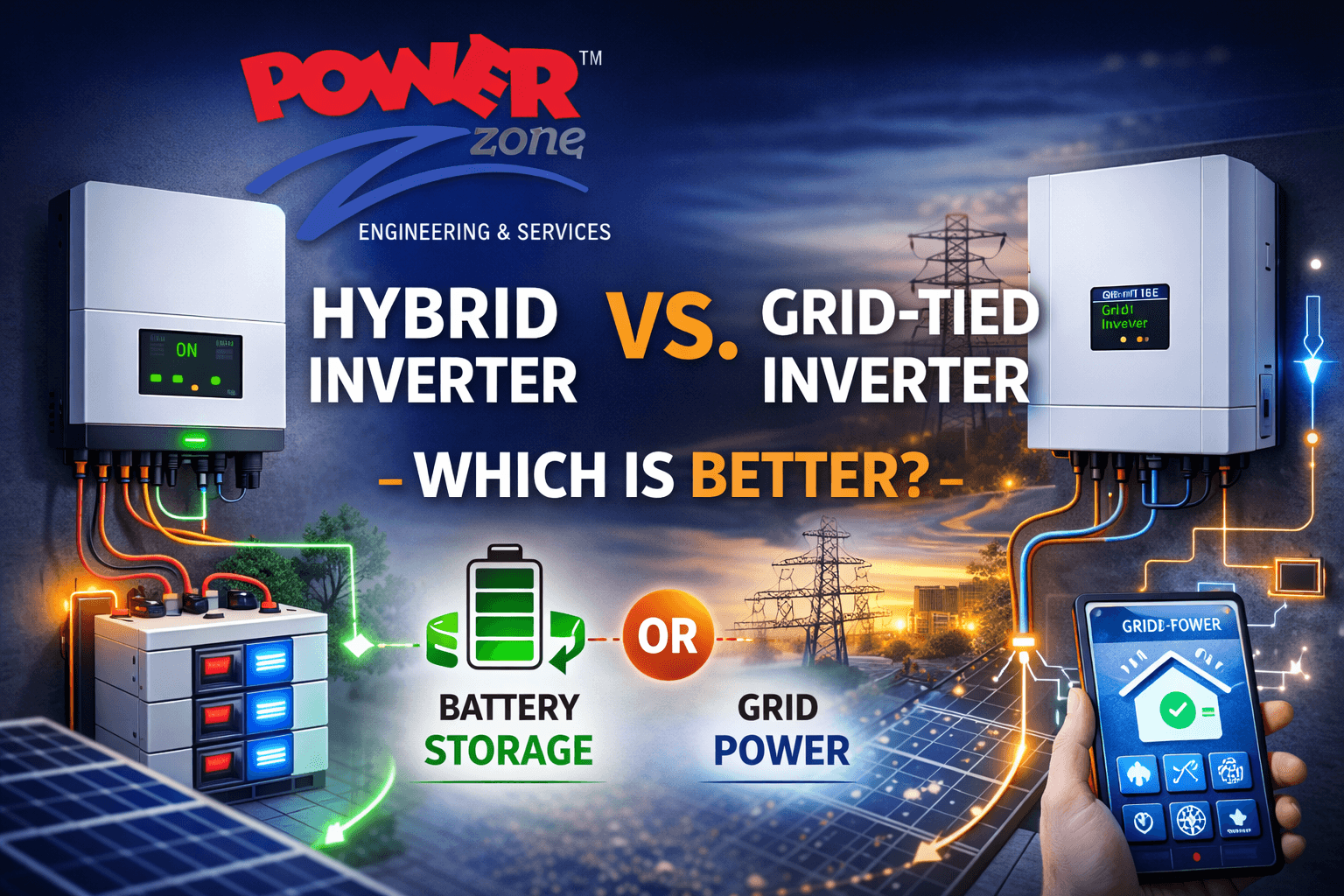
In Pakistan, electricity has become one of the biggest challenges for households and businesses. Load shedding, rising electricity bills, and unstable voltage are common issues across many cities. This is where the importance of a hybrid inverter becomes clear. A hybrid inverter is not just a backup solution — it is a smart energy management system that allows you to use solar power, store energy in batteries, and stay connected to the grid at the same time.
With increasing awareness about solar energy in Pakistan, more people are now comparing hybrid inverters with traditional grid-tied inverters. But which one is actually better? The answer depends on your needs, budget, and electricity situation.
Let’s break it down in simple terms.
What Is a Hybrid Inverter?
A hybrid inverter is a combination of a solar inverter and a battery inverter. It allows you to:
Use solar panels to power your home
Store extra electricity in batteries
Use stored energy during load shedding
Export excess electricity to the grid (in net metering systems)
In simple words, it gives you flexibility and backup at the same time.
In Pakistan, where power outages are still common in many areas, hybrid systems are becoming increasingly popular for homes, offices, and even small factories.
What Is a Grid-Tied Inverter?
A grid-tied inverter works directly with the electricity grid. It converts solar energy into usable electricity for your home. If your solar panels produce extra power, it can be exported back to the grid (if net metering is available).
However, there is one major limitation:
If the grid goes down, your grid-tied inverter also shuts down.
That means during load shedding, even if the sun is shining, your system will not provide electricity unless you have a battery backup system installed separately.
Key Differences Between Hybrid and Grid-Tied Inverters
Here are the main differences that matter in Pakistan:
1. Backup During Load Shedding
Hybrid Inverter: Provides backup through batteries.
Grid-Tied Inverter: No backup without separate batteries.
For Pakistani households facing load shedding, this is a big deciding factor.
2. Cost
Hybrid System: More expensive because it includes battery support.
Grid-Tied System: More affordable upfront.
If your area has stable electricity, a grid-tied inverter may seem more economical. But in areas with frequent outages, hybrid systems provide better long-term value.
3. Energy Independence
Hybrid: Reduces dependency on WAPDA and DISCO companies.
Grid-Tied: Fully dependent on grid availability.
Energy independence is becoming a priority due to increasing tariff rates in Pakistan.
4. Future Flexibility
Hybrid inverters are more future-proof. Even if you start without batteries, many hybrid models allow you to add batteries later.
Grid-tied systems are less flexible in comparison.
Which One Is Better for Pakistani Homes?
If you live in a major city like Lahore, Karachi, or Islamabad with fewer power outages, a grid-tied inverter with net metering can help you reduce electricity bills efficiently.
However, if you live in areas where load shedding is frequent — or if you run a business that cannot afford downtime — a hybrid inverter is clearly the better option.
In Pakistan, reliability matters more than just saving money. A hybrid system ensures your fans, lights, and essential appliances keep running even when the grid fails.
What About Businesses and Commercial Use?
For shops, clinics, schools, and offices, electricity interruptions can mean loss of customers and revenue. In such cases, hybrid inverters offer:
Continuous power supply
Reduced generator usage
Lower fuel costs
Cleaner and quieter operation
Over time, this becomes a smart investment rather than just an expense.
Battery Factor: The Game Changer
One important thing to understand is that hybrid inverters require batteries to provide backup. Lithium batteries are becoming popular in Pakistan due to:
Longer life
Faster charging
Better performance
While the initial cost is higher, the durability and efficiency make them worth considering.
Final Verdict: Hybrid vs. Grid-Tied
There is no single answer that fits everyone.
If your priority is:
Lower initial cost
Bill reduction through net metering
Stable grid electricity
Then a grid-tied inverter can work well.
But if your priority is:
Backup during load shedding
Energy independence
Long-term flexibility
Business continuity
Then a hybrid inverter is the better choice — especially in Pakistan’s current electricity situation.
In reality, many homeowners now prefer hybrid systems because they offer both savings and security.
Also, read >> How to Select the Best Hybrid Inverter for Your Solar System
Need Help Choosing the Right System?
Choosing the right inverter is not just about price — it’s about understanding your energy needs, usage pattern, and plans. Installation quality and proper maintenance also play a huge role in system performance.
PowerZone is here to help you buy, install, and maintain your Hybrid Inverter system anywhere in Pakistan. Whether you need guidance on selecting the right model or require professional maintenance services, our team ensures reliable solutions tailored to your needs.
When it comes to dependable solar energy systems in Pakistan, making the right choice today can save you years of stress tomorrow.