Why Your Hybrid Solar Inverter is Not Working Properly
Learn why your hybrid solar inverter may be underperforming, including battery faults, grid issues, and system errors, plus actionable fixes.
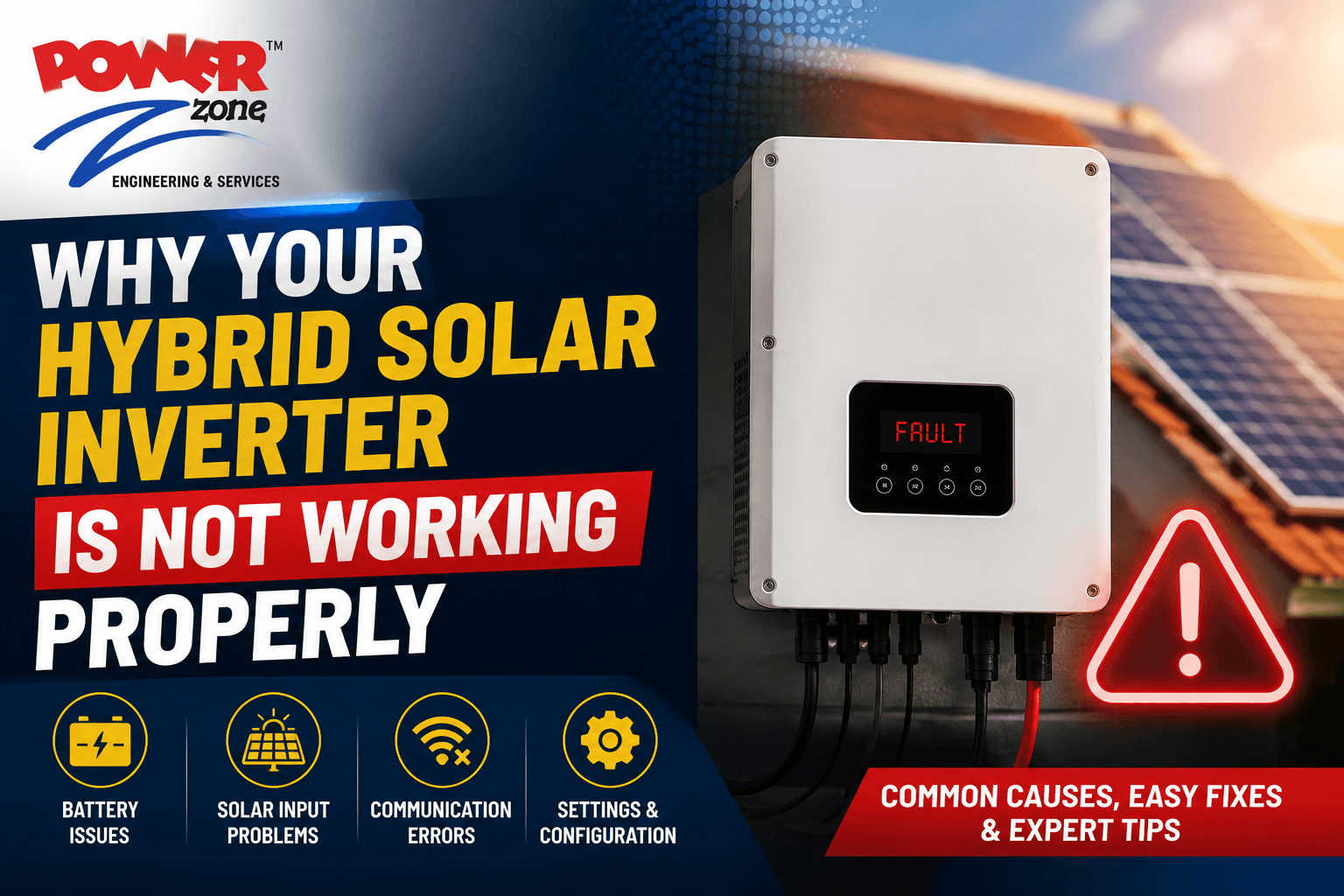
Hybrid solar inverters play a critical role in keeping homes and businesses powered, especially in Pakistan, where load-shedding and voltage fluctuations are common. When your hybrid solar inverter is not working properly, it can disrupt your entire energy system, reduce solar efficiency, and even lead to higher electricity costs. Understanding the common reasons behind these issues can help you troubleshoot early and avoid long-term damage.
Why Your Hybrid Solar Inverter is Not Working Properly
Here are some reasons why your hybrid solar inverter is not working properly.
Power Supply and Voltage Fluctuations
One of the most common reasons a hybrid inverter malfunctions in Pakistan is unstable voltage from the grid or solar panels. Frequent voltage spikes, low input voltage, or an inconsistent grid supply can force the inverter to shut down or behave abnormally.
In many areas, especially where electricity distribution is not stable, inverters struggle to maintain a balance between solar, battery, and grid input. If the inverter keeps switching off or showing errors, voltage instability could be the main cause.
Battery Issues or Faulty Battery Bank
Hybrid inverters rely heavily on batteries to store and supply power when needed. If your batteries are old, undercharged, overcharged, or damaged, the inverter may not function correctly. Common symptoms include quick battery drainage, failure to charge, or inverter shutdown during load-shedding.
In Pakistan, battery lifespan is often affected by heat, improper maintenance, and poor-quality battery selection. Using incompatible batteries or ignoring regular maintenance can lead to system failure. Always ensure your batteries are in good condition and match the specifications of your inverter.
Improper Installation or Wiring Problems
Incorrect installation is another major reason behind inverter issues. Loose wiring, improper grounding, or incorrect connections between solar panels, batteries, and the inverter can lead to malfunction. Sometimes, the inverter may display error codes or fail to start due to wiring faults.
Professional installation is essential to ensure that all components are connected properly. In many cases, minor wiring issues can escalate into serious faults if not addressed on time.
Overloading the Inverter
Every hybrid inverter has a specific load capacity. When you connect appliances that exceed this limit, the inverter may trip, shut down, or fail to supply power efficiently. Common high-load appliances in Pakistani households, such as air conditioners, irons, and water pumps, can easily overload smaller inverters.
If your inverter frequently trips or restarts, it is important to check the total load being used. Managing appliance usage or upgrading to a higher-capacity inverter may be necessary.
Faulty Solar Panels or Low Solar Output
Sometimes the issue is not with the inverter itself but with the solar panels. Dust accumulation, shading, damaged panels, or poor alignment can reduce solar output. In Pakistan’s dusty environment, solar panels require regular cleaning to maintain efficiency.
If the inverter is not receiving sufficient solar input, it may rely more on the grid or batteries, leading to performance issues. Monitoring solar generation regularly can help identify panel-related problems early.
Software or Configuration Errors
Modern hybrid inverters come with built-in software settings that control charging, discharging, and power distribution. Incorrect configuration can cause improper functioning. Settings such as battery type, charging limits, and priority modes must be configured according to your system.
If the inverter settings are accidentally changed or not set correctly during installation, it may lead to charging issues or unexpected shutdowns. Resetting or reconfiguring the inverter settings can often resolve such problems.
Overheating and Environmental Factors
Hybrid inverters generate heat during operation, and excessive heat can affect their performance. In Pakistan, high temperatures, poor ventilation, and direct sunlight exposure can cause overheating. When an inverter overheats, it may reduce output or shut down automatically to protect internal components.
Installing the inverter in a cool, well-ventilated area and ensuring proper airflow can significantly improve its performance and lifespan.
Internal Faults or Component Damage
In some cases, internal hardware faults such as damaged capacitors, relays, or circuit boards can cause the inverter to malfunction. These issues are usually more serious and require professional inspection and repair.
Signs of internal faults may include unusual noises, burning smells, frequent error codes, or complete system failure. If basic troubleshooting does not resolve the issue, it is best to consult a technician.
Conclusion
If your hybrid solar inverter is not working properly, identifying the root cause early can save you from costly repairs and downtime. Regular maintenance, proper installation, and timely troubleshooting are key to keeping your system running efficiently.
If you need any type of help related to solar inverters, we offer hybrid solar inverter maintenance services for all of Pakistan.