How Chint Inverters Convert Solar Energy into Usable Power
Learn how Chint solar inverters convert DC electricity into usable AC power, optimize solar output, and work with the grid and compatible batteries.
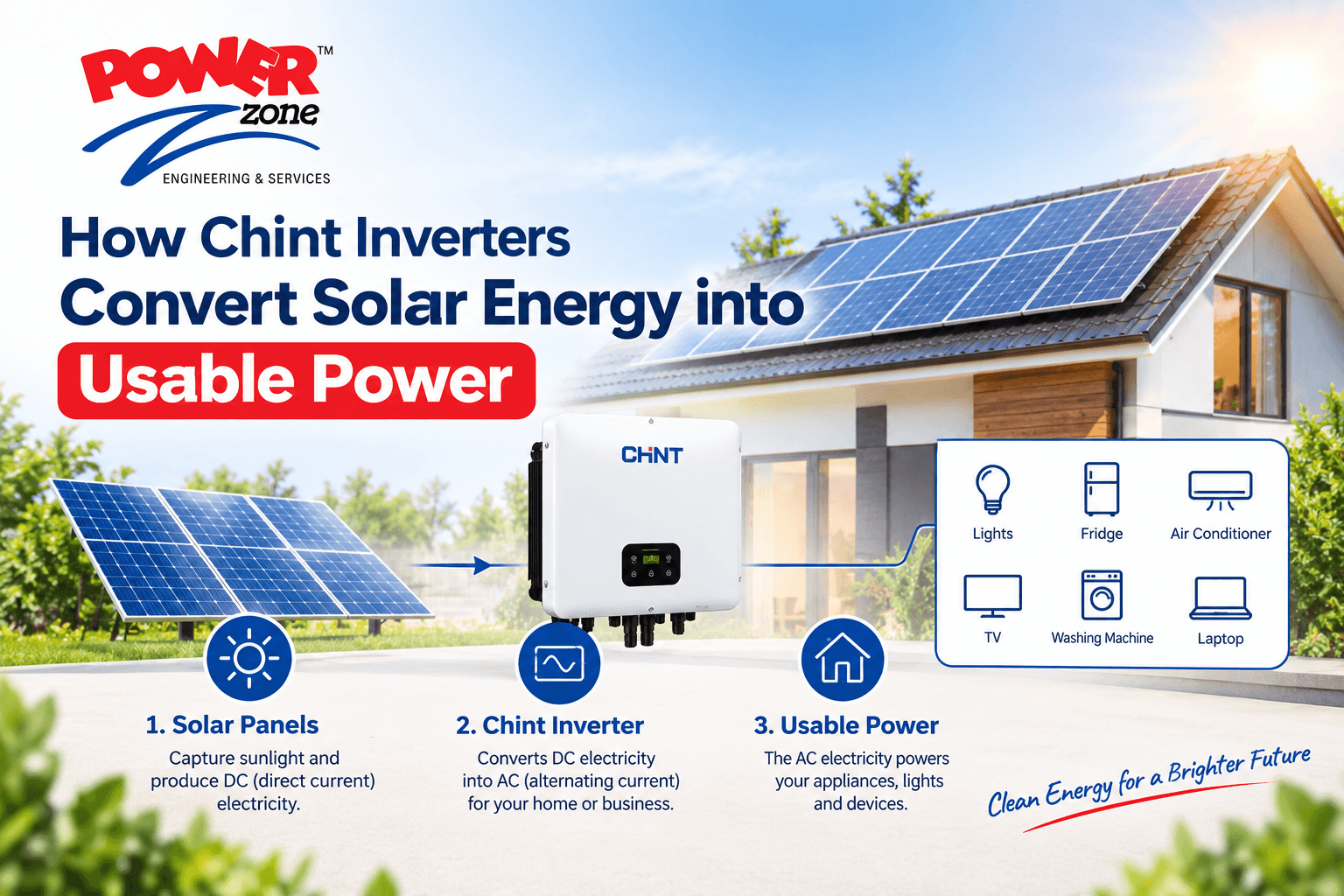
Quick answer: Chint inverters convert the direct current (DC) electricity produced by solar panels into alternating current (AC) electricity that can be used to power homes, businesses, and industrial systems. They use advanced power conversion technology, monitoring systems, and safety features to deliver efficient and reliable solar energy.
Solar panels generate electricity from sunlight, but the power they produce is not directly usable by most electrical appliances. This is where a solar inverter plays a critical role. A solar inverter acts as the connection between solar panels and your electrical system by converting, controlling, and managing the energy flow.
Chint inverters are designed to maximize solar energy utilization by efficiently converting solar power into usable electricity while maintaining system safety and performance.
In this guide, we will explain how Chint inverters work, the process of converting solar energy into usable power, and why inverters are an essential part of every solar energy system.
What Is a Solar Inverter?
A solar inverter is an electronic device that converts the electricity generated by solar panels into a form that can be used by electrical appliances.
Solar panels produce direct current (DC) electricity because sunlight creates a flow of electrons in photovoltaic cells. However, homes and businesses typically operate on alternating current (AC) electricity.
The main job of a solar inverter is to:
Convert DC power into AC power
Optimize energy production
Monitor system performance
Provide electrical protection
Connect solar systems with the grid or battery storage
Without an inverter, solar energy cannot be effectively used for everyday electrical needs.
How Chint Inverters Convert Solar Energy into Usable Power
The process of solar energy conversion involves several important steps.
1. Solar Panels Generate DC Electricity
The process begins when sunlight reaches solar panels.
Photovoltaic (PV) cells inside the panels absorb solar radiation and create electrical energy in the form of direct current (DC).
The amount of electricity generated depends on factors such as:
Sunlight intensity
Panel efficiency
Weather conditions
Solar system design
The DC electricity produced by the solar panels is then transferred to the Chint inverter.
2. Chint Inverters Receive and Manage DC Power
Once the DC electricity reaches the inverter, Chint’s power management technology analyzes and controls the incoming energy.
The inverter ensures that the solar system operates efficiently by managing:
Voltage levels
Current flow
Energy output
Power stability
This helps maintain consistent energy conversion throughout the day.
3. DC Electricity Is Converted into AC Electricity
The core function of a Chint inverter is DC-to-AC conversion.
The inverter uses electronic switching components to transform the one-directional flow of DC electricity into alternating current electricity.
This converted AC power can then be used by:
Home appliances
Lighting systems
Commercial equipment
Industrial machinery
The quality of this conversion affects the overall efficiency of the solar system.
4. Maximum Power Point Tracking (MPPT) Optimizes Energy Output
Many Chint solar inverters include MPPT technology.
MPPT continuously monitors solar panel performance and adjusts operating conditions to extract the maximum available power.
This is important because solar energy production changes throughout the day due to:
Changing sunlight levels
Temperature variations
Partial shading
MPPT helps the inverter maintain higher energy generation under different conditions.
5. AC Power Is Supplied to Electrical Systems
After conversion, usable AC electricity flows from the inverter to the building’s electrical system.
The generated solar power can be used for:
Running appliances
Reducing grid electricity usage
Supporting commercial operations
Charging batteries in hybrid systems
If the solar system produces more electricity than needed, excess energy can be stored or exported to the grid depending on the system setup.
Also, read: >> Chint Inverter Maintenance Checklist
Key Features of Chint Solar Inverters
Chint inverters are designed with features that support efficient solar energy management.
High Conversion Efficiency
Efficient power conversion helps reduce energy losses and improves the overall performance of a solar system.
Smart Monitoring
Many modern Chint inverter systems provide monitoring capabilities that allow users to track:
Energy production
System performance
Fault notifications
Daily power generation
Safety Protection
Solar inverters include safety mechanisms to protect the system from issues such as:
Overvoltage
Overcurrent
Short circuits
Grid abnormalities
Reliable Performance
Chint inverters are built for different applications, including residential, commercial, and industrial solar installations.
Why Is the Inverter Important in a Solar Energy System?
Solar panels receive most of the attention in solar installations, but the inverter is equally important.
A high-quality inverter ensures that:
Solar energy is converted efficiently
Electrical systems receive stable power
System performance can be monitored
Safety standards are maintained
Choosing the right inverter helps maximize the long-term benefits of a solar investment.
Conclusion
Chint inverters play an essential role in transforming solar energy into usable electricity. They receive DC power generated by solar panels, optimize energy production through technologies like MPPT, and convert electricity into AC power for homes, businesses, and industrial applications.
By improving energy conversion efficiency, providing monitoring capabilities, and supporting safe operation, Chint inverters help solar systems deliver reliable and effective renewable energy solutions.
FAQs
1. What does a Chint inverter do?
A Chint inverter converts DC electricity generated by solar panels into AC electricity that can be used by electrical appliances.
2. Why is an inverter needed in a solar system?
Solar panels produce DC power, while most electrical devices use AC power. An inverter converts solar energy into a usable form.
3. How efficient are Chint solar inverters?
Chint inverters are designed for high-efficiency energy conversion, helping maximize solar power output.
4. Can Chint inverters work with batteries?
Some Chint inverter models support hybrid solar systems with battery storage capabilities.
5. How does MPPT technology improve solar performance?
MPPT technology helps solar inverters adjust operating conditions to capture the maximum available power from solar panels.